
Cape Cod Native Plants Part 1
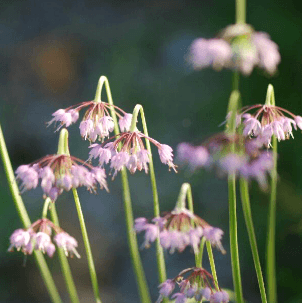
Photo courtesy of Van Berkum Nursery.
Allium cernuum (Nodding Onion)
Known as pollinator magnets, these easy-to-grow plants sport adorable pom-pom-like purple-pink flowers all summer. They also host the caterpillars for the yellow-striped armywork moth and the hairstreak butterfly, making them an important part of any butterfly garden.
Technically, nodding onions are not native to Cape Cod, but they are native to Long Island’s pine barrens, the same ecosystem as we have on the Cape (and we thought it was okay to include them, as the Cape Cod Native Plant finder also includes them).
Over time, this plant will spread by both seed and bulb offshoots. Mass plantings make for striking displays, and, as a bonus, the greens can be used like chives for cooking.
Sun:
Full Sun to Part Shade
Height:
12-18”
Bloom time:
Summer
Pollinators: Bees, butterflies, hummingbirds
Water:
drought tolerant*
Spread:
12”
Resistant:
Deer, rabbits
Host: yellow-striped armyworm moth, hairstreak butterfly
* Drought tolerant when established. Plants need to be watered regularly in their first season so they can establish a strong root system, but soil should not be soggy.
Photo courtesy of Centerton Nursery.
Aquilegia canadensis (Wild Columbine)
A delicate woodland plant that provides a welcome spot of color in early spring, with blooms emerging in March, wild columbine flourishes in part to full shade. The long spurs on the unusual red and yellow flowers hold nectar and attract long-tongued bees, butterflies and hummingbirds.
Because of its early bloom time, wild columbine provides an important source of energy for migrating hummingbirds when few other plants are in bloom.
Wild columbine will go dormant in late summer and return in the fall. Plants will readily self-seed; new plants will bloom in their second year.
Sun:
full to part
Height:
12-24”
Bloom time:
Mar - Jul
Pollinators: bees, butterflies, hummingbirds
Water:
drought tolerant*
Spread:
12”
Resistant:
deer, rabbits
Host: columbine duskywing butterfly
* Drought tolerant when established. Plants need to be watered regularly in their first season so they can establish a strong root system, but soil should not be soggy.
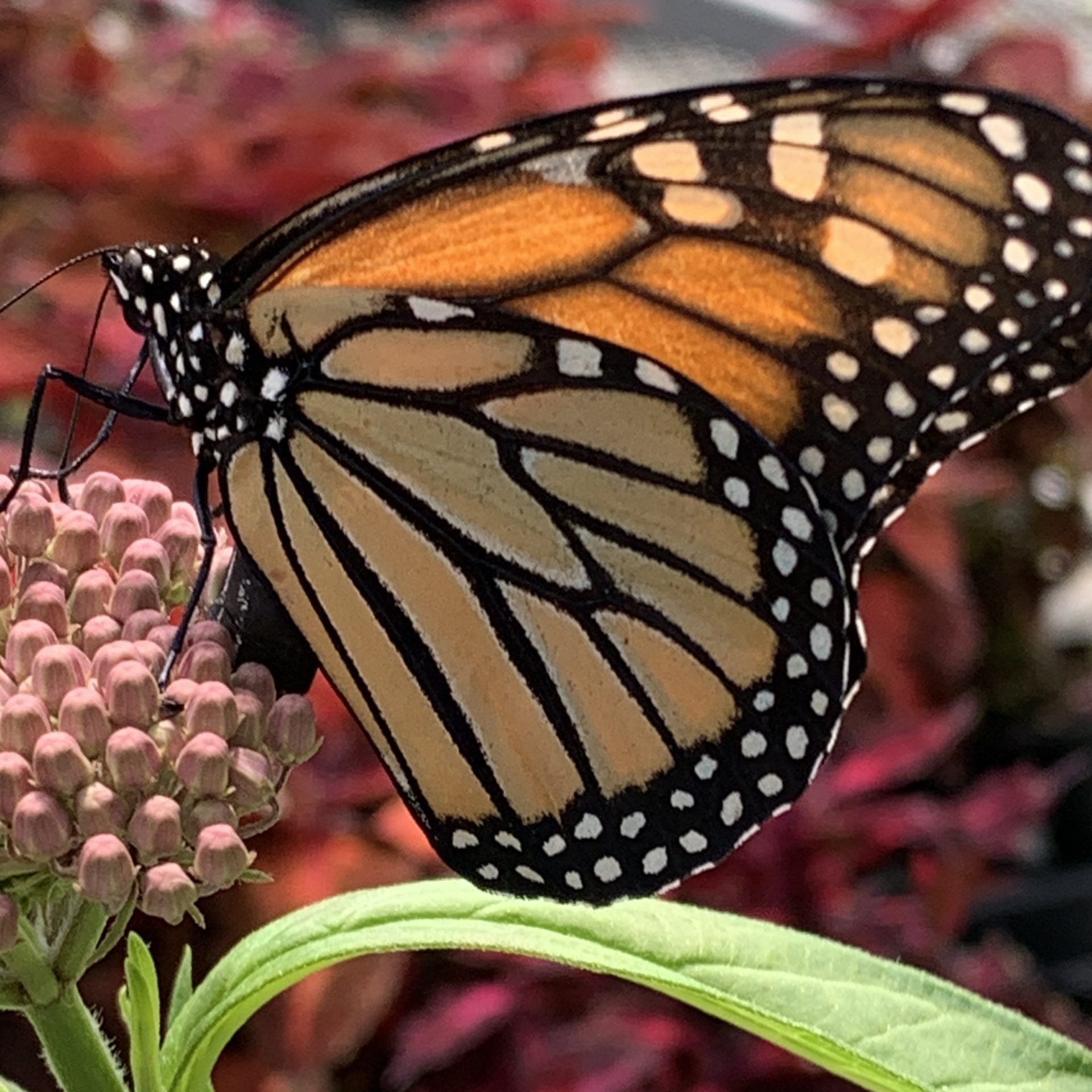
Photo by Crocker Nurseries
Asclepias incarnata (Swamp Milkweed)
Swamp milkweed blooms with rosy pink flowers from early to mid-summer, providing food and a place to lay eggs for the Monarch Butterfly. Its nectar makes it a favorite for a wide range of pollinators.
Swamp Milkweed has specialized thick white roots that do well in heavy, wet soils that are low in oxygen. In the wild these plants are typically found alongside streams, ponds, or bogs, but can adapt to loam or clay soils.
Three to four inch narrow seed pods split in fall to release seeds with tufts of feathery hair that float on the wind
Sun:
full to part shade
Height:
36-48”
Bloom time:
Jun - Jul
Pollinators: Bees, butterflies
Water:
moist
Spread:
24”
Resistant:
Deer, rabbits
Host: Monarch butterflies
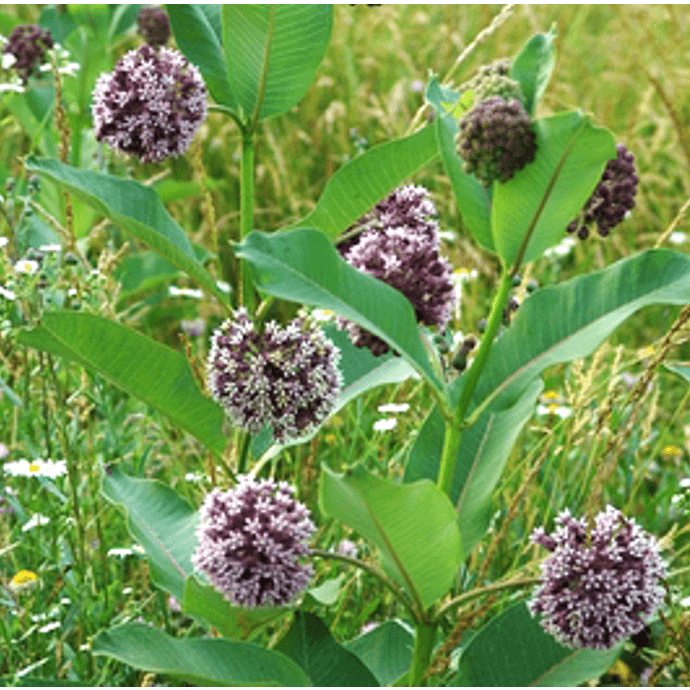
Photo courtesy of Van Berkum Nursery.
Asclepias syriaca (Common Milkweed)
Well-known as the host for the monarch butterfly caterpillars, common milkweed also hosts the tussock moth caterpillar. Its dense clusters of small, fragrant, pink flowers are also extremely attractive to pollinators, attracting a wide range of insects.
Common milkweed can be found in fields, open woods, and waste areas. It’s easily grown in average, well-drained soils and full sun. The plant can do well in poor, somewhat dry soils.
The common milkweed is a tall, slender plant with sturdy stems, and looks best when planted in a group or among other tall plants. The plants spread both through rhizomes and through seeds, released from seed pods in late summer and fall.
Sun:
Full to part sun
Height:
12-24”
Bloom time:
Mar - Jul
Pollinators: Bees, butterflies
Water:
drought tolerant*
Spread:
12”
Resistant:
Deer, rabbits
Host: monarch butterfly, tussock moth
* Drought tolerant when established. Plants need to be watered regularly in their first season so they can establish a strong root system, but soil should not be soggy.
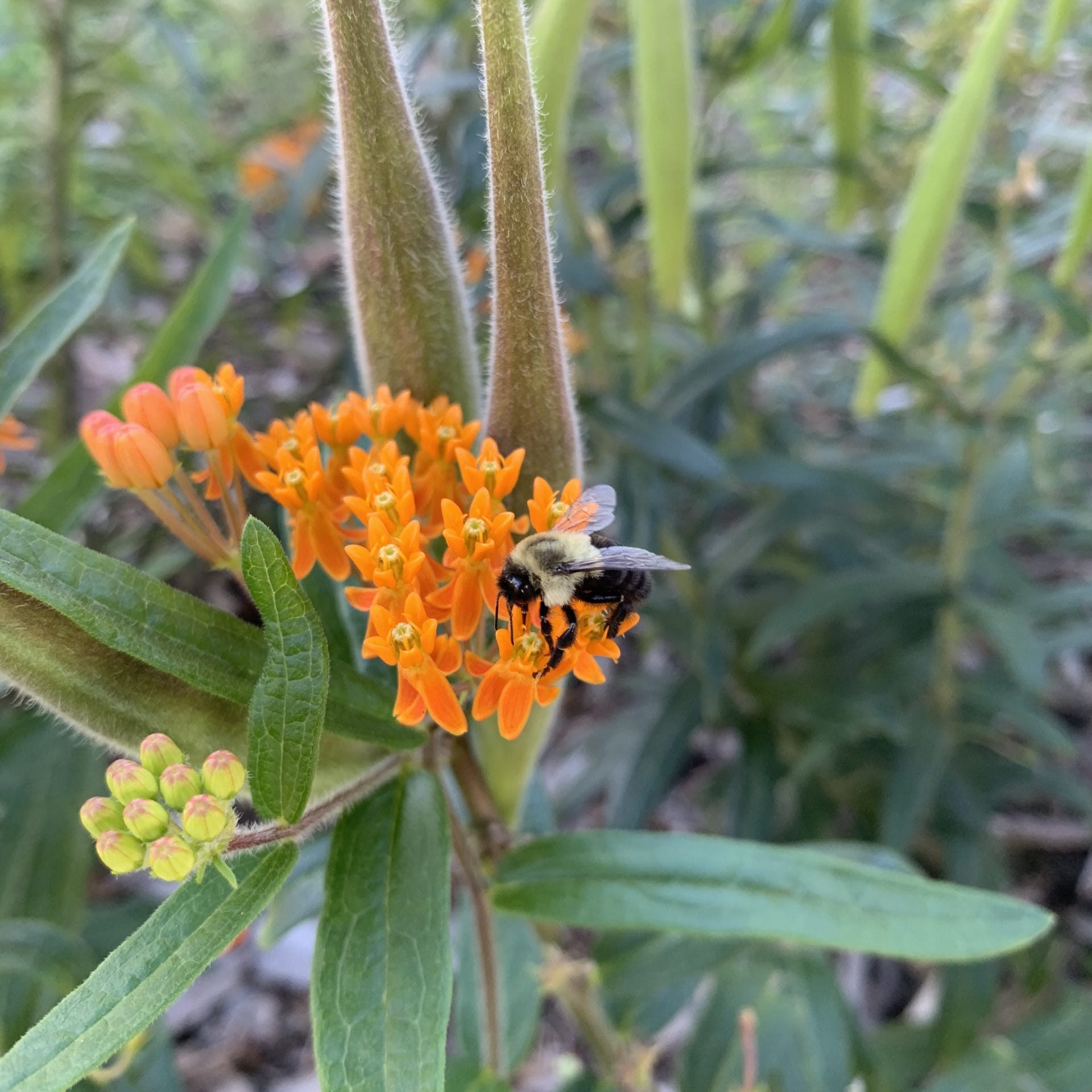
Photo by Crocker Nurseries
Asclepias tuberosa (Butterfly Milkweed)
One of the showiest wildflowers with its bright orange blossoms all summer, butterfly milkweed is a host plant for monarch butterfly caterpillars. Hummingbirds and a wide range of other pollinators are attracted by its nectar.
The plant’s name, “tuberosa”, refers to the tuberous shape of its deep taproot, which makes the plant difficult to transplant – so it’s best to pick a sunny, well-draining spot, and let this easy-to-grow plant flourish. New growth emerges a bit on the late side in spring; it’s a slow starter.
Butterfly milkweed blooms give way to narrow, spindle shaped seed pods, which will burst in late summer or early fall and lead to self-seeding.
Sun:
Full Sun
Height:
12-28”
Bloom time:
Jun - Aug
Pollinators: Bees, butterflies, hummingbirds
Water:
drought tolerant*
Spread:
12”
Resistant:
Deer, rabbits
Host: monarch butterflies
* Drought tolerant when established. Plants need to be watered regularly in their first season so they can establish a strong root system, but soil should not be soggy.
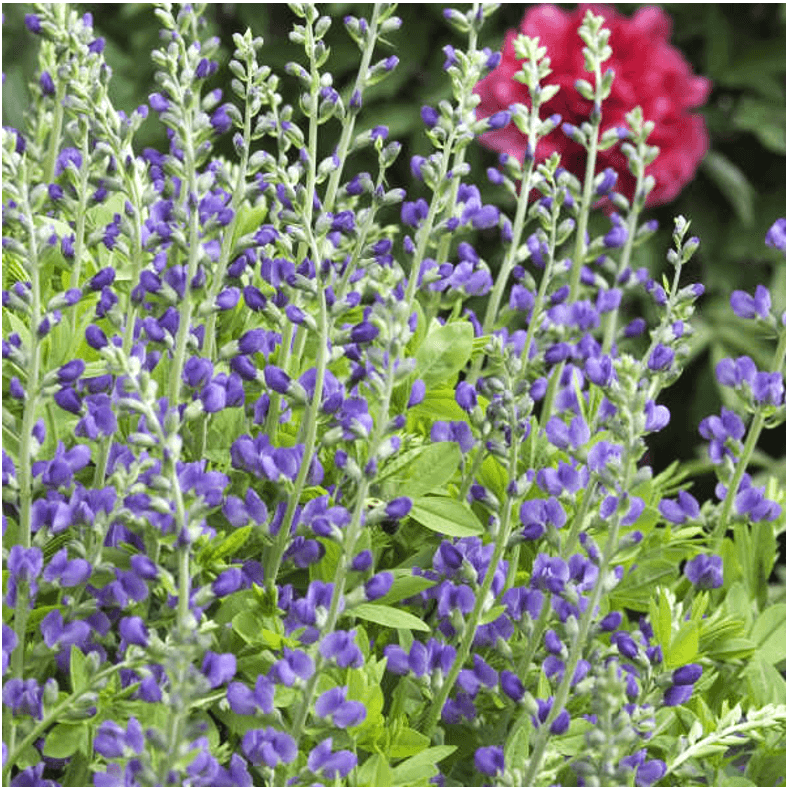
Photo courtesy of Van Berkum Nursery.
Baptisia australis (Blue False Indigo)
Blue false indigo plays host to the caterpillars of several varieties of butterfly, including the wild indigo duskywing, the orange sulphur, the clouded sulphur, the eastern tailed blue, and the frosted elfin. In addition, blue false indigo is especially important to native bees.
Blue false indigo blooms in spring, with dense, upright spikes covered in pea-like purple-blue flowers. Typically found in rich woods, this plant does best in full sun. Over time, it will build a large root system, becoming drought tolerant, but because of this root system, it’s not easily moved.
The plant tends to open up after blooming, and might benefit from being cut back to shape it. However, that would mean missing out on the striking seed pods that darken to black about six weeks after blooming.
Sun:
Full sun to part shade
Height:
36 - 48”
Bloom time:
May - June
Pollinators: Bees, butterflies
Water:
drought tolerant*
Spread:
24-48”
Resistant:
Deer, rabbits
Host: several varieties of butterflies
* Drought tolerant when established. Plants need to be watered regularly in their first season so they can establish a strong root system, but soil should not be soggy.
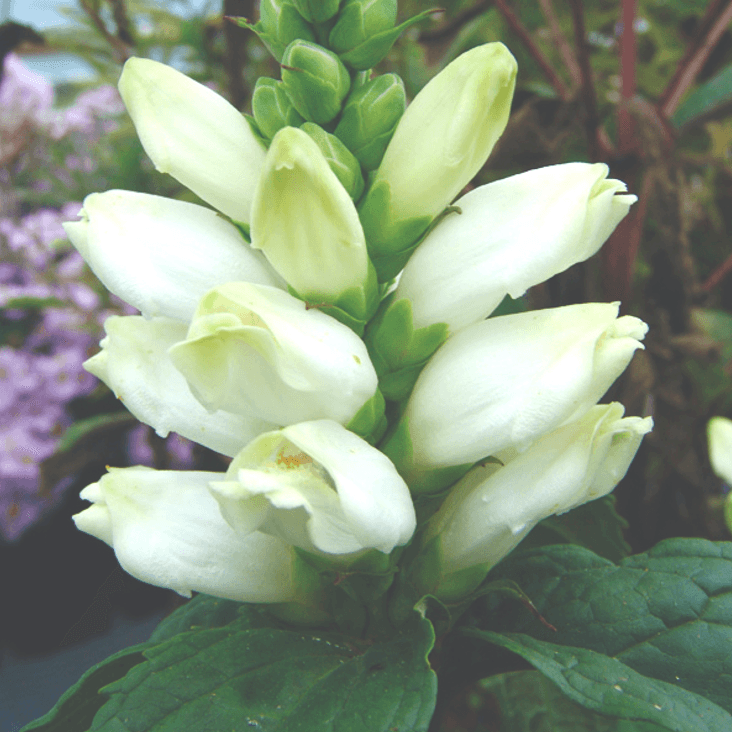
Photo courtesy of Van Berkum Nursery.
Chelone glabra (White Turtlehead)
Named for its white flowers that resemble turtles’ heads, white turtlehead hosts a number of butterfly and moth caterpillars, including the Baltimore checkerspot and the common buckeye. Hummingbirds and butterflies are attracted to its nectar, and you will often see a bumblebee forcing its way into the partially closed flowers.
The plant is happiest in moist, rich soils in partial shade; in the wild it’s found in moist woods, swampy areas, and along streams.
The plant is somewhat susceptible to mildew, particularly if soil is kept dry and air circulation is poor, but overall there are no serious problems.
Sun:
Part shade
Height:
24-28”
Bloom time:
Aug
Pollinators: Bees, butterflies, hummingbirds
Water:
med to wet
Spread:
18-28”
Resistant:
Deer, rabbits
Host: Monarch Butterflies
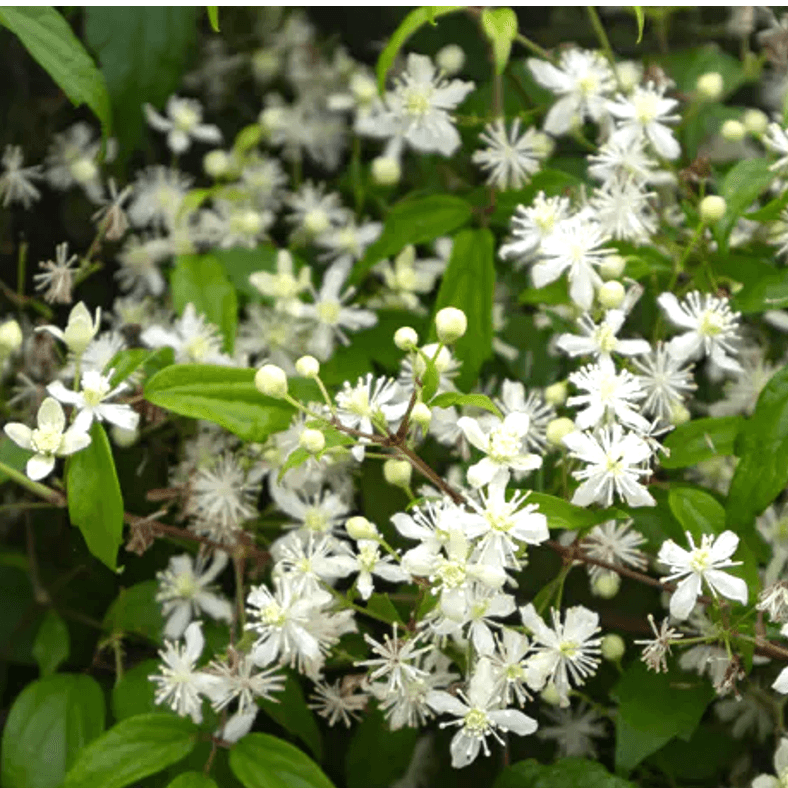
Photo courtesy of Centerton Nursery
Clematis virginiana (Woodbine or Virgin’s Bower vine)
This vine, one of the few that will flower in shade, is covered in delicate, fragrant white flowers from August well into autumn, attracting a wide range of pollinators, including hummingbirds. Additionally, the vine hosts nine species of moth and butterfly caterpillars, including the Clematis clearwing moth.
A Type 3 Clematis, flowers emerge on new wood and the vine should be hard-pruned to 12 inches in late winter or early spring, leaving a few healthy leaf buds on the remaining stalks. It’s a fast grower, and will reach up to 20 feet high and over three feet wide by the end of the season, and does best with a trellis or other support for climbing.
The plant needs a good supply of nutrients to support its rapid growth. It can spread aggressively through self-seeding and suckering.
Sun:
Full sun to part shade
Height:
144 - 240” (vine)
Bloom time:
Aug - Oct
Pollinators: Bees, butterflies, hummingbirds
Water:
medium to wet
Spread:
36 - 72”
Resistant:
Deer, rabbits
Host: several butterfly and moth caterpillars
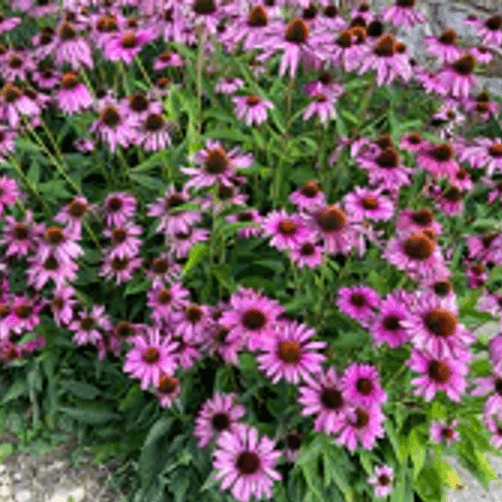
Photo courtesy of Centerton Nursery
Echinacea purpurea (Purple Coneflower)
While the purple coneflower’s native range includes New York and Pennsylvania, it does well on Cape Cod, and has been included in the Cape Cod Native Plant database, so we’ve included it in our range of natives. The plant is valuable in particular to native bees, and goldfinches and other birds will visit the cones well into the winter, to feed on the seeds.
Purple Coneflowers are easily grown in dry to medium well-drained soils. They are attractive to rabbits, and new plants should be protected. Established plants will rapidly send up new growth from the roots.
Sun:
Full to part sun
Height:
24-36”
Bloom time:
Jun - Aug
Pollinators: Bees, butterflies, hummingbirds
Water:
drought tolerant*
Spread:
18-24”
Resistant:
Host:
* Drought tolerant when established. Plants need to be watered regularly in their first season so they can establish a strong root system, but soil should not be soggy.
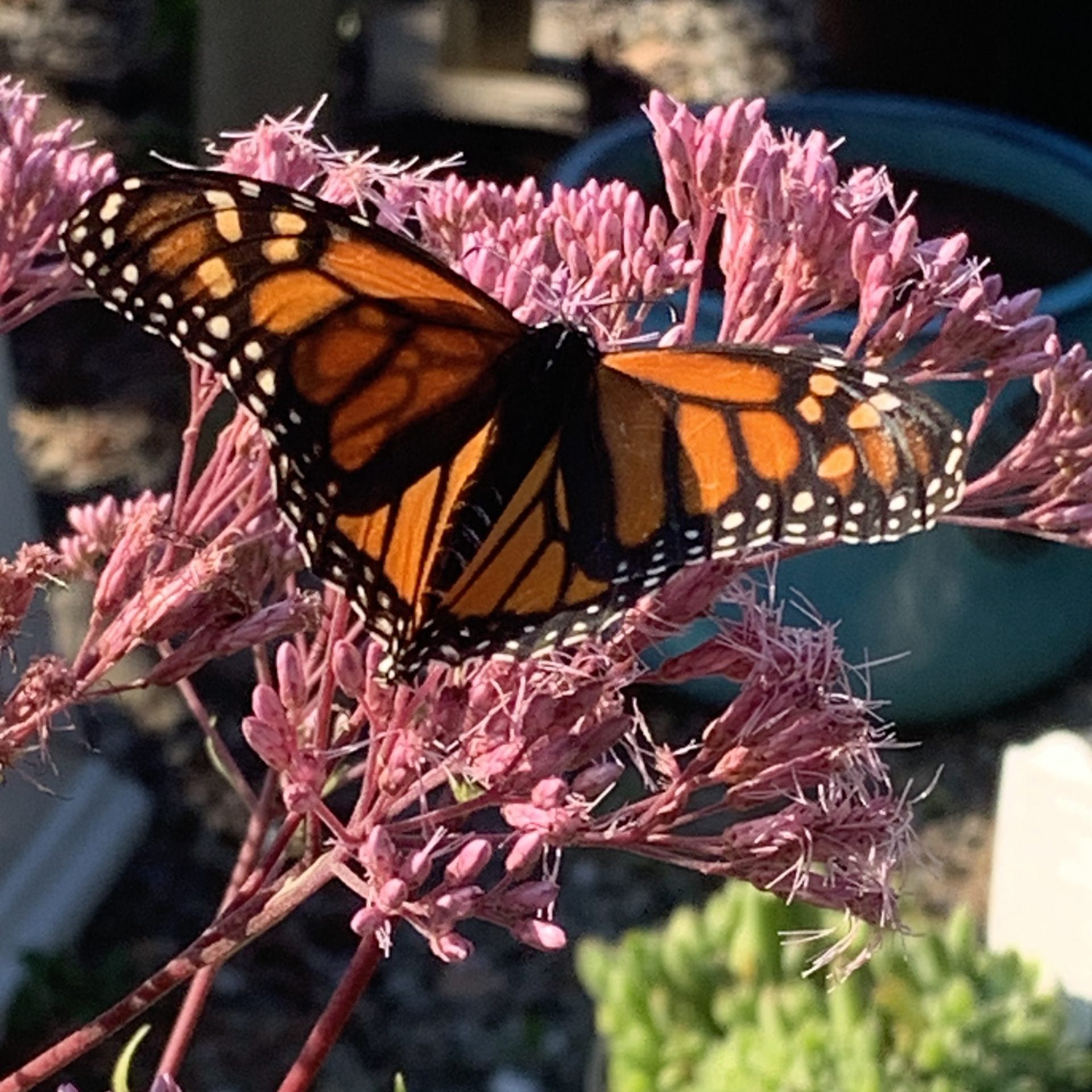
Photo by Crocker Nurseries
Eutrochium dubium (Coastal Plain Joe Pye Weed)
A vital pollinator plant, coastal Joe Pye weed blooms late in the summer and into September, with large, fragrant, dome-shaped clusters of pink to dark purple flowers that attract bees, skippers, and butterflies, including swallowtails. The plant also plays host to several different types of caterpillars, which, in addition to becoming butterflies and moths, are also excellent food for birds. Birds feed on the seeds in fall.
These plants are easily grown in full sun to part shade, and prefer moist, fertile soils. While the shortest of the Joe-Pye weeds at between three and five feet, they still create a dramatic backdrop for a late summer perennial garden, or as part of a wildflower meadow.
Sun:
Full to part sun
Height:
36 - 72”
Bloom time:
Jul - Sep
Pollinators: Bees, butterflies, hummingbirds
Water:
medium to wet
Spread:
24 - 48”
Resistant:
Deer
Host: several types of caterpillars
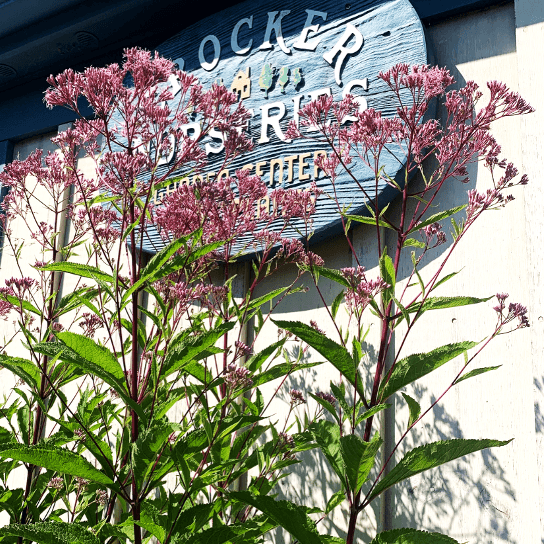
Photo by Crocker Nurseries
Eutrochium maculatum (Spotted Joe Pye Weed)
The towering spotted Joe Pye Weed is an important source of pollen and nectar at the end of summer and into fall, when many other plants have finished blooming. The nectar and the plant’s sweet fragrance attract a wide range of pollinators, including hummingbirds. All Joe Pye weeds play important roles as hosts of over thirtyfive species of moth and butterfly caterpillars, including ruby tiger moths.
This plant likes moist, humusy, rich soils that don’t dry out. It does best in full sun, but can tolerate some afternoon shade. It’s native to damp meadows and coastal areas.
With its height, spotted Joe Pye weed makes a fantastic backdrop for black-eyed Susans, coneflowers, asters, and works well with grasses, many of which bloom around the same time.
Sun:
full to part sun
Height:
36 - 72”
Bloom time:
Jul - Sep
Pollinators: Bees, butterflies, hummingbirds
Water:
medium to wet
Spread:
24 - 48”
Resistant:
Deer
Host: 35+ types of caterpillars
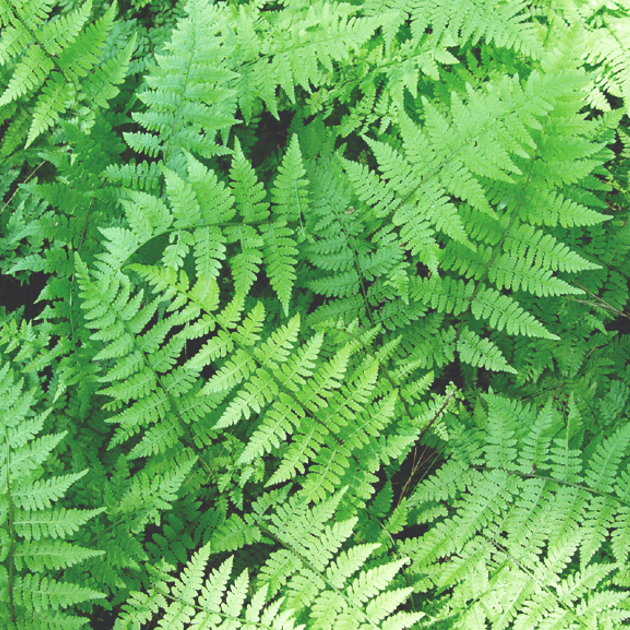
Photo courtesy of Van Berkum Nursery.
Fern - Athyrium filix-femina (Lady Fern)
Ferns don’t bloom and therefore don’t support pollinators, however they shouldn’t be overlooked when it comes to benefitting wildlife. Ferns create safe foraging spaces and shelters for small birds and animals, and hiding places for frogs and turtles.
Lady ferns grow best in rich, well-drained soils of medium moisture, in partial to full shade. They make an excellent, easily grown plant, tolerating drier soil than other ferns.
Lady ferns will creep slowly, and can form a beautiful ground cover in the right conditions.
Sun:
Part to full shade
Height:
12-36”
Bloom time:
-
Pollinators: -
Water:
medium
Spread:
12 - 30"
Resistant:
Deer, rabbits
Host: -
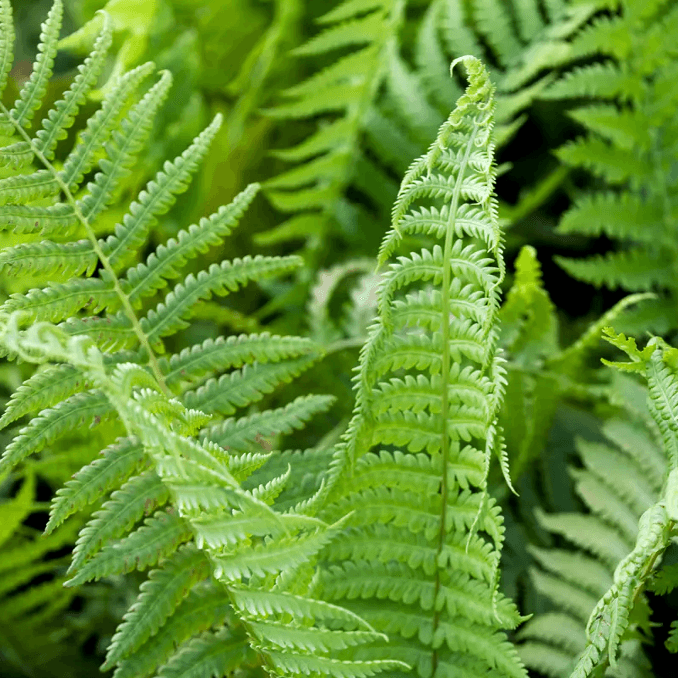
Photo courtesy of Centerton Nursery
Fern - Matteuccia struthiopteris (Ostrich Fern)
Ostrich Ferns can reach six feet tall when growing in moist, cool climates in the wild, but tend to reach about three feet when grown in cultivation. They do well when planted with early blooming native shade wildflowers, and will be well grown by the time those plants go dormant.
While not supporting pollinators, they will provide shelter for small animals while they forage.
Given their height, Ostrich Ferns make a dramatic and lush backdrop for a shade garden.
Sun:
Part to full shade
Height:
36 - 72”
Bloom time:
-
Pollinators: -
Water:
medium to wet
Spread:
60 - 72”
Resistant:
Deer, rabbits
Host: -
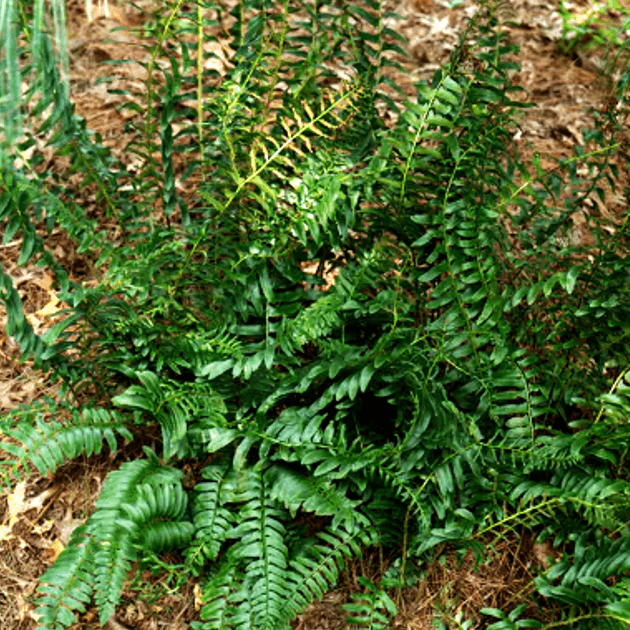
Photo courtesy of Centerton Nursery
Fern - Polystichum acrostichoides (Christmas Fern)
Christmas Ferns remain green year-round, providing winter cover for small animals. Songbirds will use parts of the plant for nesting materials.
These evergreen ferns are typically found in both dry or moist wooded slopes and, while rhizomatous, will not spread or naturalize, but rather form fountain-shaped clumps about 2 feet high. These are great plants for massing on dry, rocky slopes to help prevent erosion.
Sun:
Part to full shade
Height:
12-24”
Bloom time:
-
Pollinators: -
Water:
dry to medium
Spread:
12 - 24”
Resistant:
Deer, rabbits
Host: -
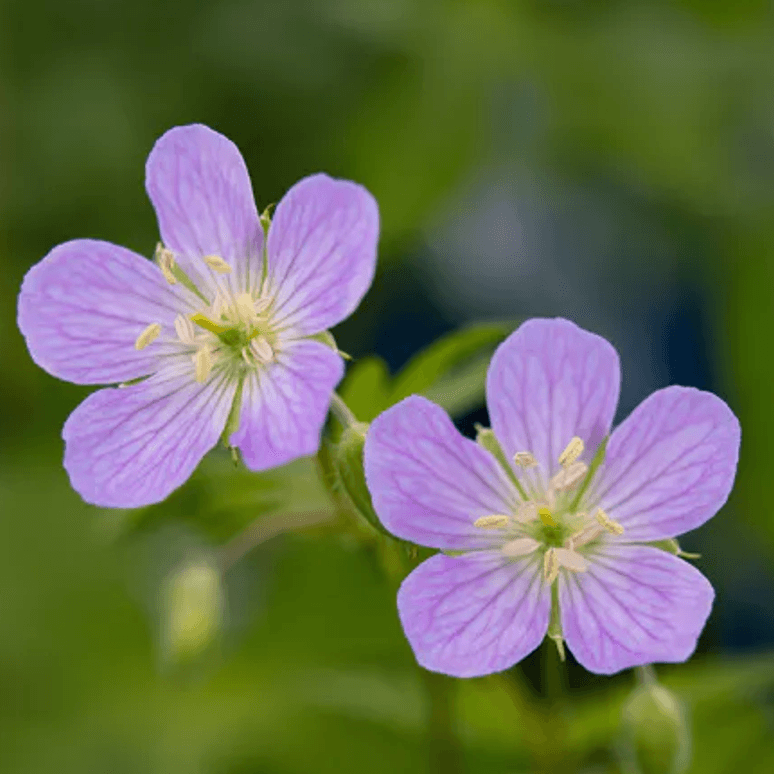
Photo courtesy of Centerton Nursery
Geranium maculatum (Wild Geranium or Cranesbill)
Wild geranium, a spring bloomer with pale pink to lilac flowers about one inch across, hosts several species of caterpillars, and provide nectar to butterflies, beetles, flies, and bees, including a native bee, the Cranesbill Miner, which is thought to rely solely on Wild Geranium. Birds, including mourning doves and sparrows, eat the seeds.
Wild Geranium will spread, but not over-aggressively, forming a nice groundcover over time. Easily grown, this plant prefers rich, loamy soils, can adapt to either sun or part shade, and once established becomes drought tolerant. It’s one of those rare plants that can handle dry shade.
Wild Geraniums’ seed dispersal is fun to watch: its seeds develop at the bottom of narrow spikes that look like cranes’ beaks (hence the name “cranesbill”), and when dry, the spikes eject the seeds like tiny catapults.
Sun:
Sun to part shade
Height:
18 - 24”
Bloom time:
Apr - May
Pollinators: Bees, butterflies, flies
Water:
medium
Spread:
12 - 18”
Resistant:
Deer, rabbits
Host: several species of caterpillars
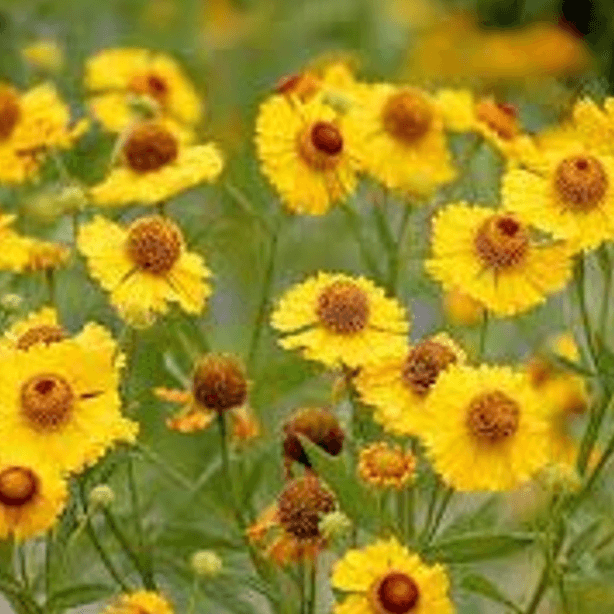
Photo courtesy of Van Berkum Nursery.
Helenium autumnale (Common Sneezeweed)
Despite its name, common sneezeweed does not cause sneezing or hayfever; the name has its root in the plant’s dried leaves’ historical use as snuff.
Common sneezeweed is truly prolific, with one mature plant able to produce up to 100 blooms. This attracts a wide range of pollinators, and the plant is a vital source of late-season nectar. In addition, common sneezeweed is a host for the caterpillars of several native butterflies and moths.
This plant does not tolerate dry soils; it prefers rich, moist soils and does best in full sun. Plants can be cut back in early June to encourage more branching and therefore more flowers.
Sun:
Full sun to part shade
Height:
36 - 72”
Bloom time:
Aug - Oct
Pollinators: Bees, butterflies
Water:
medium
Spread:
24 - 36”
Resistant:
Deer, rabbits
Host: several species of caterpillars
Resources:
Missouri Botanical Garden Plant Finder
Association to Preserve Cape Cod’s Cape Cod Native Plant Finder
North Carolina Extension Gardener Plant Toolbox
Northern Gardener by the Minnesota State Horticultural Society
Virginia Native Plant Society, Conserving Wild Flowers and Wild Places
Xerces Society for Invertebrate Conservation, Pollinator-friendly Plant Lists