
Cape Cod Native Plants Part 2
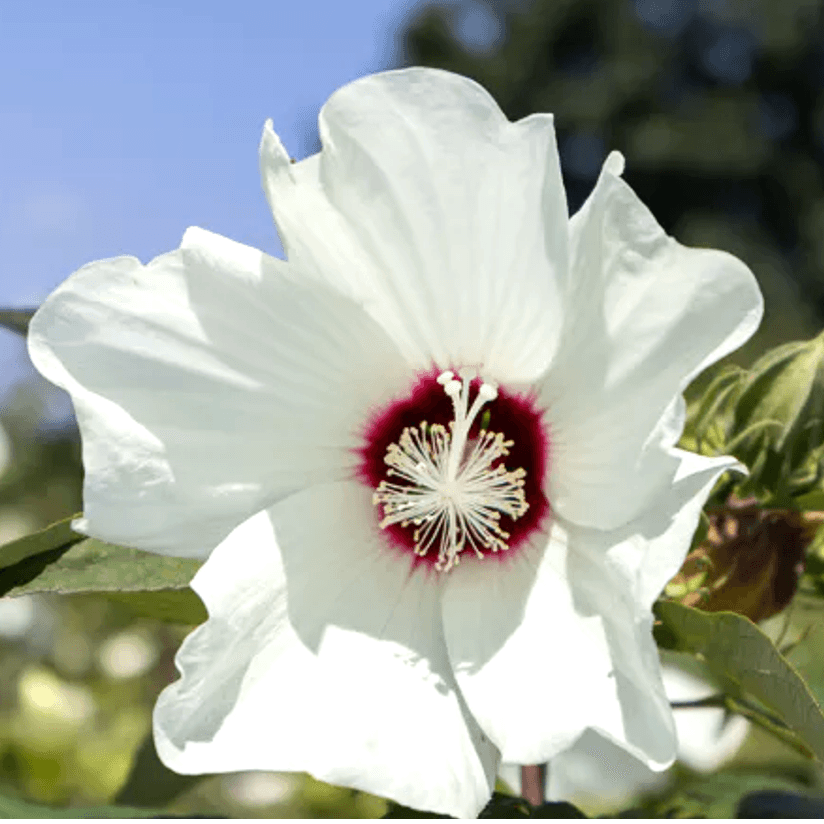
Photo courtesy of Centerton Nursery.
Hibiscus Moscheutos (Swamp Rose Mallow or Hardy Hibiscus)
The rose mallow’s large white-to-pink blooms – up to eight inches across – attract all sorts of pollinators, including bees, butterflies, and hummingbirds. Twenty eight species of butterfly and moth caterpillars use this plant as a host.
Each flower lasts only one or two days, but, when mature, this shrub-like perennial can produce twenty or more new flowers each day, providing striking beauty over several weeks of bloom time, late in the summer and into the fall.
In nature, this plant is found in the borders of marshes and swamps, and moist meadows, so it requires regular watering, especially during dry periods. Rose mallow flowers best in full sun. Despite its shrub-like appearance, Rose Mallow dies back to the ground in the fall, and should be cut back in late winter or early spring to about six inches above the ground.
Sun:
Full Sun
Height:
36 - 72”
Bloom time:
Aug - Oct
Pollinators: Bees, butterflies, hummingbirds
Water:
medium to wet
Spread:
24 - 36”
Resistant:
Deer, rabbits
Host: several species of caterpillars
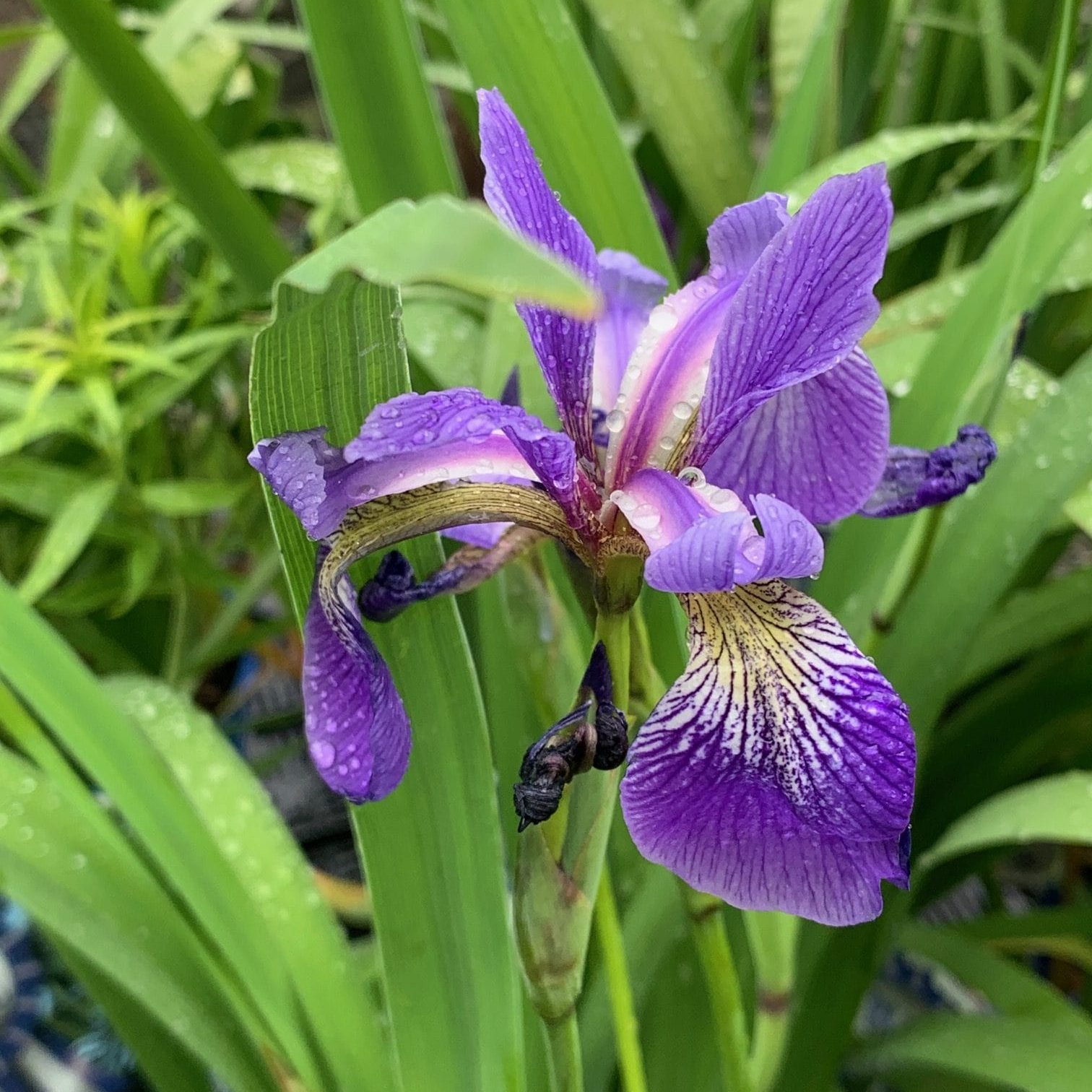
Photo by Crocker Nurseries
Iris Versicolor (Blue Flag Irises)
Butterflies, hummingbirds, and bees are attracted by the blue flag irises’ vibrant colors and nectars. The plant also acts as host for thirteen butterfly and moth caterpillars.
Blue flag irises are native to marshes, swamps, wet meadows, and shoreline, and can be grown in up to four inches of standing water or in constantly moist humusy soil. They look wonderful grown in groups in sunny areas near ponds or water gardens
These irises can be propagated by division after they bloom, but as their rhizomes are poisonous, this should be done while wearing gloves to avoid a possible rash.
Sun:
Sun to part shade
Height:
12-36”
Bloom time:
May - Jun
Pollinators: Bees, butterflies, hummingbirds
Water:
medium to wet
Spread:
12 - 24”
Resistant:
Deer, rabbits
Host: several species of caterpillars
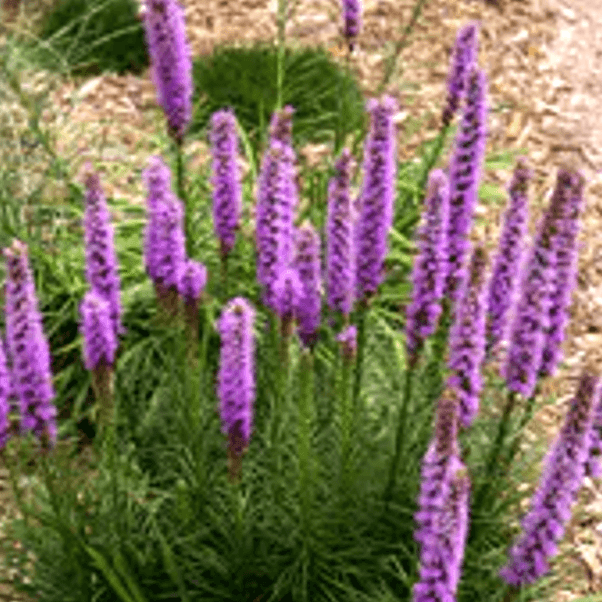
Photo courtesy of Centerton Nursery.
Liatris spicata (Blazing Star)
The blazing star is the host plant for the caterpillars of both the Liatris flower moth and the Liatris borer moth, and attracts pollinators, including bees, hummingbirds, and beneficial insects. The plant’s small seeds are attractive to song birds.
The flowers are shaped like bottlebrushes, and bloom from the top down. Their shape, deep purple color, and the delicacy of their foliage, contrasts beautifully with coneflowers and black-eyed Susans, which also bloom mid-summer.
Native to most low grounds, meadows, and marsh edges, blazing star is easily grown in average, well-drained soil, though it is somewhat tolerant of poor soils. The plant does not tolerate wet soil in winter, but can handle summer heat and humidity.
Sun:
Full Sun
Height:
18 - 30”
Bloom time:
Jul - Aug
Pollinators: Bees, butterflies, hummingbirds
Water:
medium
Spread:
6 - 12”
Resistant:
Deer, rabbits
Host: several species of caterpillars
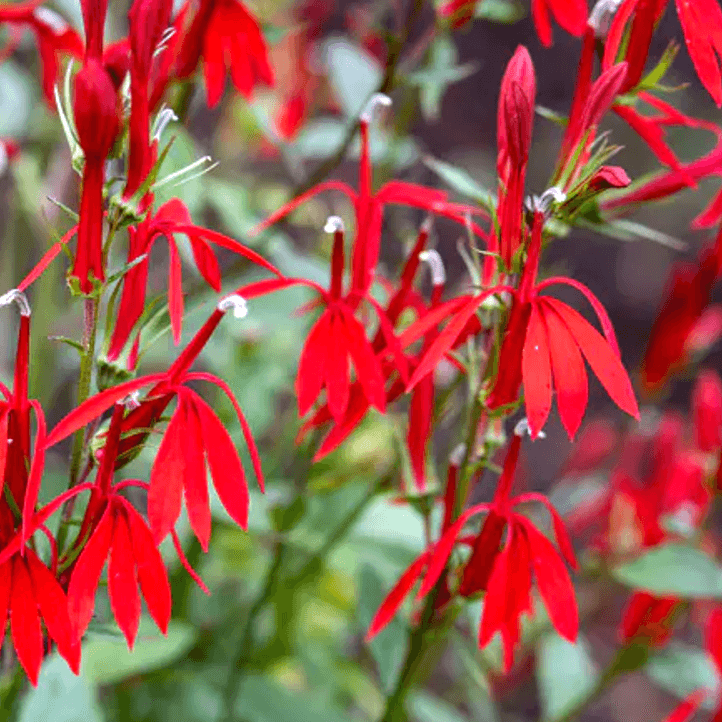
Photo courtesy of Centerton Nursery.
Lobelia cardenalis (Cardinal Flower)
If you want to attract hummingbirds to your garden, this is the flower. At two to three feet tall, it’s the right height; the flowers are shaped like tubular cups and hold nectar; and they are bright red – a hummingbird’s favorite color. Butterflies love these flowers as well. The plants also host several species of butterfly larvae.
Cardinal flowers need rich, consistently moist soil to do well; their native habitat is along stream edges or wet meadows. These plants will even tolerate brief flooding. They do well in full sun, though with our increasingly hot summers, they may welcome some afternoon shade.
The plant is toxic to humans and pets.
Sun:
Sun to part shade
Height:
24-36”
Bloom time:
Jul - Sep
Pollinators: Bees, butterflies, hummingbirds
Water:
medium to wet
Spread:
8-12”
Resistant:
Deer, rabbits
Host: several species of caterpillars
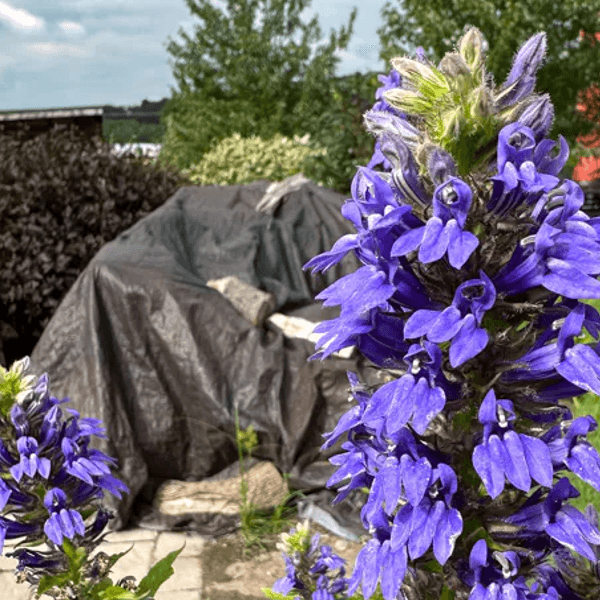
Photo courtesy of Centerton Nursery.
Lobelia siphilitica (Great Blue Lobelia)
A wide variety of bees, hummingbirds, and butterflies are attracted to the striking blue flowers of the great blue lobelia; its flowers are slightly more open than those of its famous cousin, the Cardinal flower, and so can be pollinated by long-tonged bees, not just hummingbirds and proboscis-sporting insects like butterflies. The plant also hosts several butterfly and moth caterpillars, including the pink-washed looper moth.
In the wild, the great blue lobelia can be found in moist to wet areas, along streams, swamps, meadows, and low wooded areas. It can be grown easily in rich, moist to wet soils in sun to part shade; it needs constant moisture.
Sun:
Sun to part shade
Height:
24-36”
Bloom time:
Jul - Sep
Pollinators: Bees, butterflies, hummingbirds
Water:
medium to wet
Spread:
8-12”
Resistant:
Deer, rabbits
Host: several species of caterpillars
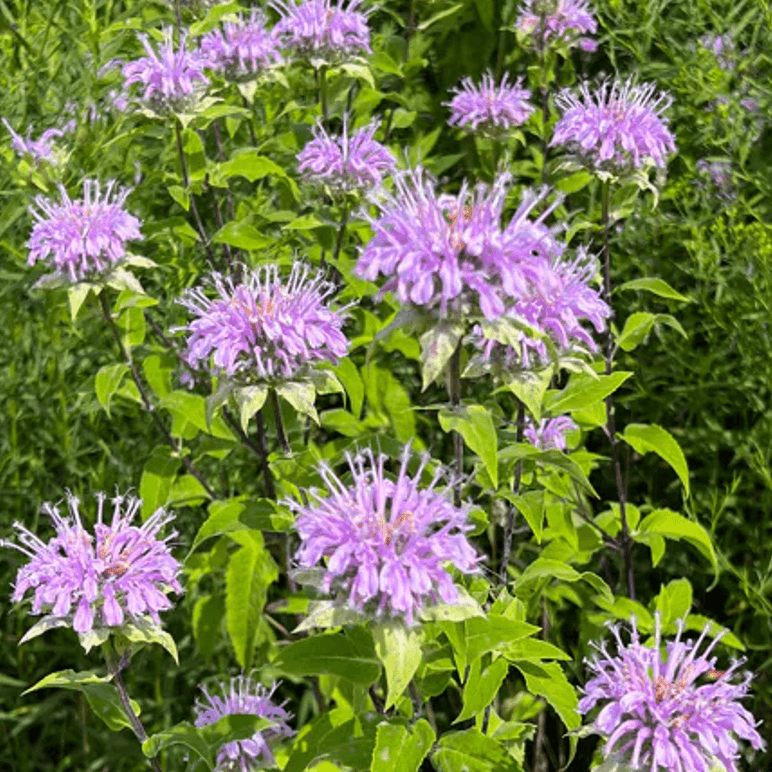
Photo courtesy of Centerton Nursery.
Monarda fistulosa (Wild Bergamot)
Wild bergamot is an excellent choice for a pollinator-friendly garden, as bees, including specialist bees, wasps, hummingbirds, and hawk moths love the fragrance and nectar from its pink and lilac flowers, and benefit from the plant’s long bloom time.
Wild bergamot is shorter than some of its Monarda cousins, and while the plant does form clumps, it’s a less aggressive spreader than some other varieties. Wild bergamot is best grown in dry to medium moisture soils, in either full sun or part shade.
Powdery mildew can be a problem with all the Monardas, but this species has good mildew resistance. Monardas do best with good air circulation.
Sun:
Sun to part shade
Height:
24-48”
Bloom time:
Jul - Sep
Pollinators: Bees, butterflies, hummingbirds
Water:
drought tolerant*
Spread:
24-36”
Resistant:
Deer, rabbits
Host: several species of caterpillars
* Drought tolerant when established. Plants need to be watered regularly in their first season so they can establish a strong root system, but soil should not be soggy.
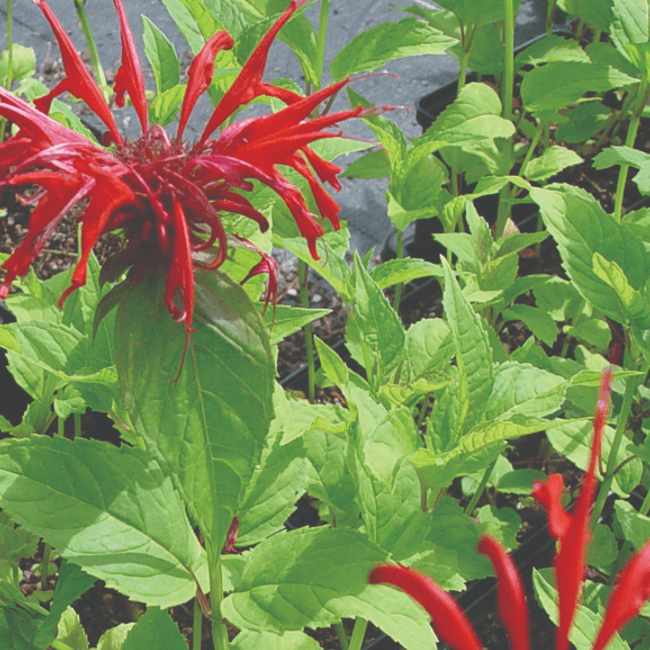
Photo courtesy of Van Berkum Nursery.
Monarda didyma ‘Jacob Cline’ (Scarlet Beebalm ‘Jacob Cline’)
Scarlet Beebalm ‘Jacob Cline’ is a common native beebalm cultivar we have included in our range of plants because, while similar in color, shape, and size to the straight species, it is much more vigorous and resistant to disease, including powdery mildew, a common issue with Monarda. Its large red flowers attract hummingbirds, as well as bees and butterflies.
Found in bottomlands, thickets, moist woods, and along stream banks, scarlet beebalm prefers rich, medium to wet, moisture retentive soil, and grows in full sun to part shade. Standing tall at three to four feet, this variety tends to spread, occasionally aggressively, and should be divided every three to four years to prevent overcrowding.
Beebalm is a member of the mint family, and when leaves are crushed they release a lovely minty scent.
Sun:
Sun to part shade
Height:
36-48”
Bloom time:
Jul - Aug
Pollinators: Bees, butterflies, hummingbirds
Water:
medium
Spread:
36-48”
Resistant:
Deer, rabbits
Host: several species of caterpillars
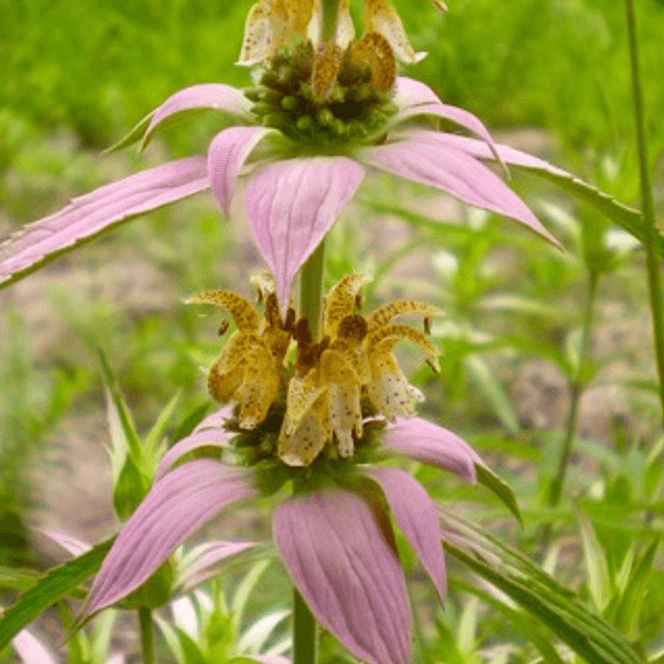
Photo courtesy of Van Berkum Nursery.
Monarda punctata (Spotted Beebalm)
The flowers on spotted beebalm are beautiful and unusual, and known for being pollinator magnets, drawing bees, butterflies, butterfly moths, hummingbirds, and others to the plant. Each complex blossom displays multiple colors, including pink, purple, green, yellow, and maroon.
This variety of beebalm is more drought tolerant than others; rather than growing in moist areas, in the wild Spotted Beebalm grows in sandy areas, prairies, and Oak savannahs. This plant grows best in full sun and sandy soil with consistent moisture. Spotted beebalm can be a short-lived perennial, but readily self-seeds and can naturalize in appropriate conditions.
Leaves are noticeably fragrant and can be used to make tea.
Sun:
Sun to part sun
Height:
18-24”
Bloom time:
Jul - Sep
Pollinators: Bees, butterflies, hummingbirds
Water:
drought tolerant*
Spread:
9-12”
Resistant:
Deer, rabbits
Host: several species of caterpillars
* Drought tolerant when established. Plants need to be watered regularly in their first season so they can establish a strong root system, but soil should not be soggy.
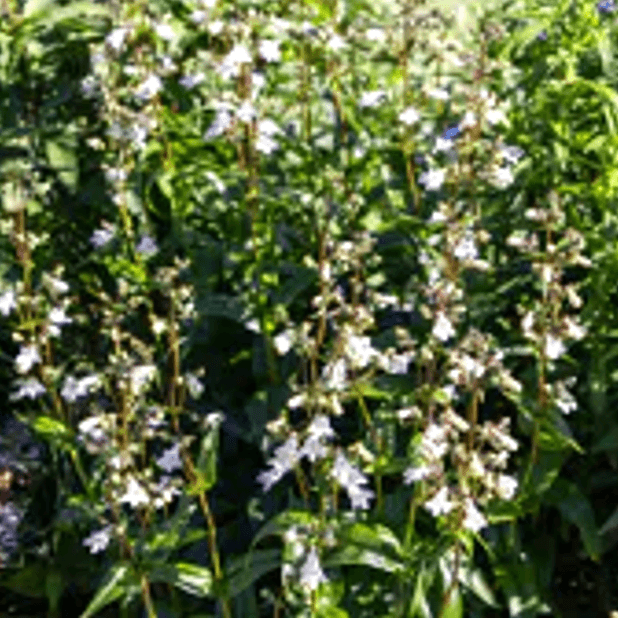
Photo courtesy of Centerton Nursery.
Penstemon digitalis (Foxglove Beardtongue)
Foxglove beardtongue’s tubular white flowers attract long-tongued bees, butterflies, and hummingbirds. The plant is host to several moth and butterfly caterpillars, including the Chalcedon checkerspot and Edith’s checkerspots.
Found in prairies, wood margins, and open woods, this plant prefers average, dry to medium well-drained soils in full sun, and may suffer root rot in poorly drained soils.
Despite its name, this plant is not related to Foxgloves, and doesn’t have their toxicity. Perhaps the namer saw some resemblance in the plants’ flowers.
Sun:
Full sun
Height:
36 - 48”
Bloom time:
Apr - Jun
Pollinators: Bees, butterflies, hummingbirds
Water:
drought tolerant*
Spread:
18 - 24”
Resistant:
Deer, rabbits
Host: several species of caterpillars
* Drought tolerant when established. Plants need to be watered regularly in their first season so they can establish a strong root system, but soil should not be soggy.
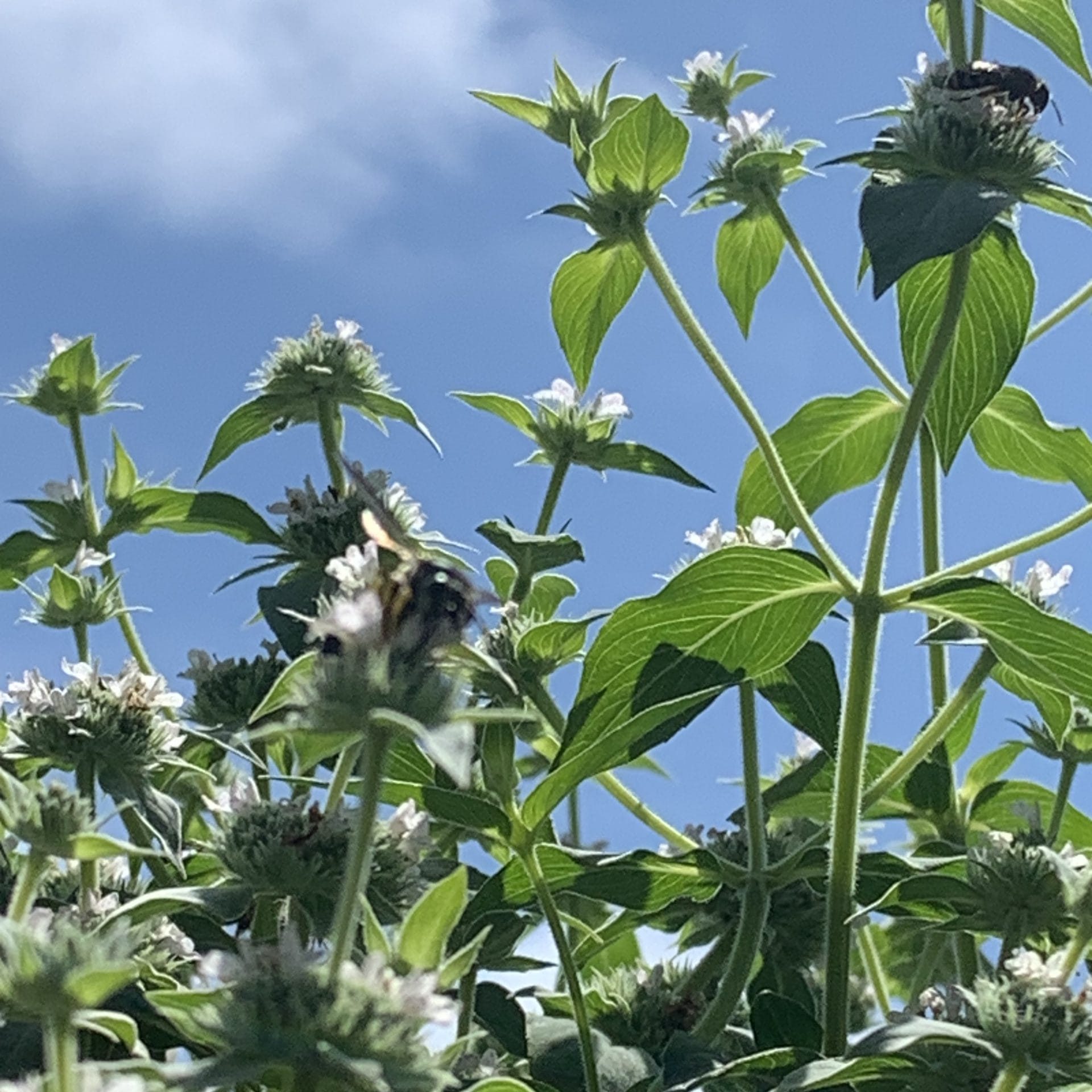
Photo by Crocker Nurseries
Pycanthemum muticum (Mountain Mint)
Mountain mint with its tall white and light pink flowers and a silvery sheen on its aromatic foliage is a pollinator powerhouse – extremely attractive especially to bees and butterflies, though less so to hummingbirds, who visit on occasion. Mountain mint also hosts larvae of several moth and butterfly species.
Mountain mint typically grows in open spaces like meadows and fields, but not in alpine spaces as its somewhat misleading name suggests. This plant does best in fertile, medium moisture, well-draining soil, in full to part sun, with the best flowering in full sun.
While not an aggressive spreader like true mints, mountain mint does spread through rhizomes. The rhizomes are fairly close to the surface, however, so can easily be controlled by cutting with a shovel in the spring.
Sun:
Sun to part sun
Height:
12-36”
Bloom time:
Jul - Sep
Pollinators: Bees, butterflies
Water:
drought tolerant*
Spread:
12-36”
Resistant:
Deer, rabbits
Host: several species of caterpillars
* Drought tolerant when established. Plants need to be watered regularly in their first season so they can establish a strong root system, but soil should not be soggy.
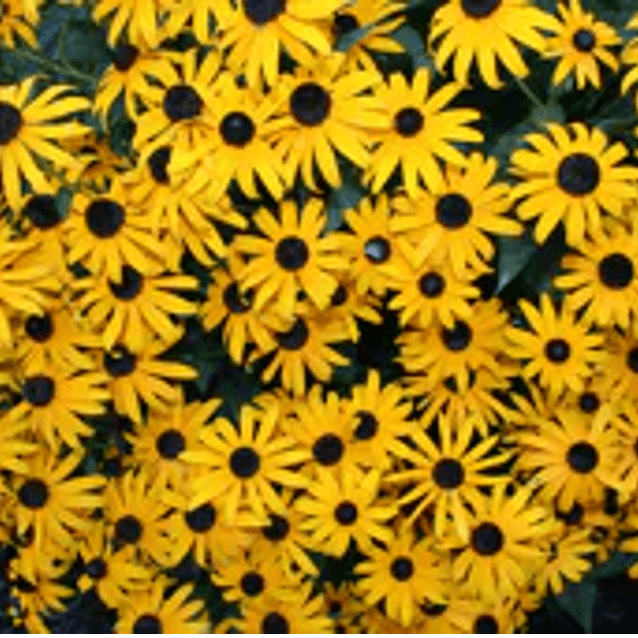
Photo courtesy of Centerton Nursery.
Rudbeckia fuldiga (Black-Eyed Susan or Orange Coneflower)
The late-summer blooms on this variety of black-eyed Susan glow a slightly orangy yellow around its black center, and act as important sources of nectar for a wide range of pollinators. The plant hosts the larvae of several moths and butterflies, including the wavy-lined emerald and the silvery checkerspot.
Black-eyed Susans are found in both dry and moist soils in open woods and thickets. They are easily grown in dry to medium moisture, organically rich soil, and bloom best in full sun, though they will tolerate light shade.
These plants spread slowly through rhizomes, and can be deadheaded to encourage additional blooming. However, leaving the final flowers in place will ensure that the songbirds get their seeds in the fall.
Sun:
Sun to part sun
Height:
24-36”
Bloom time:
Jul - Sep
Pollinators: Bees, butterflies
Water:
drought tolerant*
Spread:
24-30”
Resistant:
Deer, rabbits
Host: several species of caterpillars
* Drought tolerant when established. Plants need to be watered regularly in their first season so they can establish a strong root system, but soil should not be soggy.
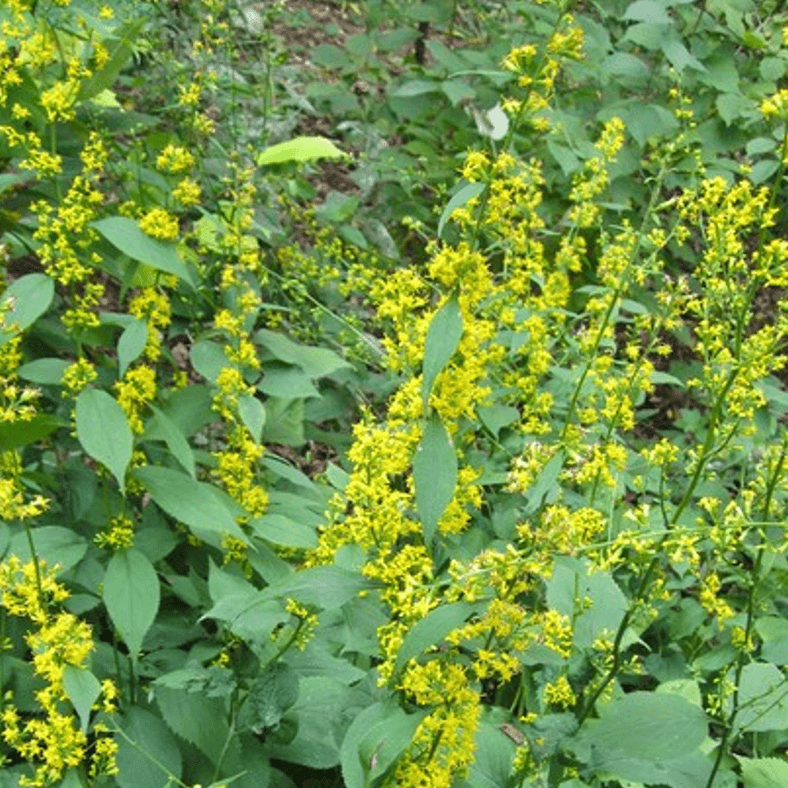
Photo courtesy of Van Berkum Nursery.
Solidago flexicaulis (Zigzag Goldenrod)
Named for the way its stem grows back and forth, the zigzag goldenrod is a vitally important source of nectar to native bees, wasps, butterflies, and pollinating flies, providing food late in the season. The plant also hosts a number of moth larvae, and songbirds and mice eat the seeds.
Zigzag goldenrod brightens shady spots with its small yellow flowers that grow in clusters on the upper part of the stems – it’s of the rare pollinator-friendly plants that will tolerate full shade, though sun-dappled shade works best.
Goldenrods have often been wrongly accused of causing hayfever or seasonal allergies; they are not wind pollinators. The true culprits may be ragweed, a wind pollinator that blooms at the same time but perhaps has escaped blame because of its inconspicuous flowers.
Sun:
Sun to part sun
Height:
12-36”
Bloom time:
Aug - Oct
Pollinators: Bees, butterflies
Water:
medium
Spread:
12-36”
Resistant:
Deer, rabbits
Host: several species of caterpillars
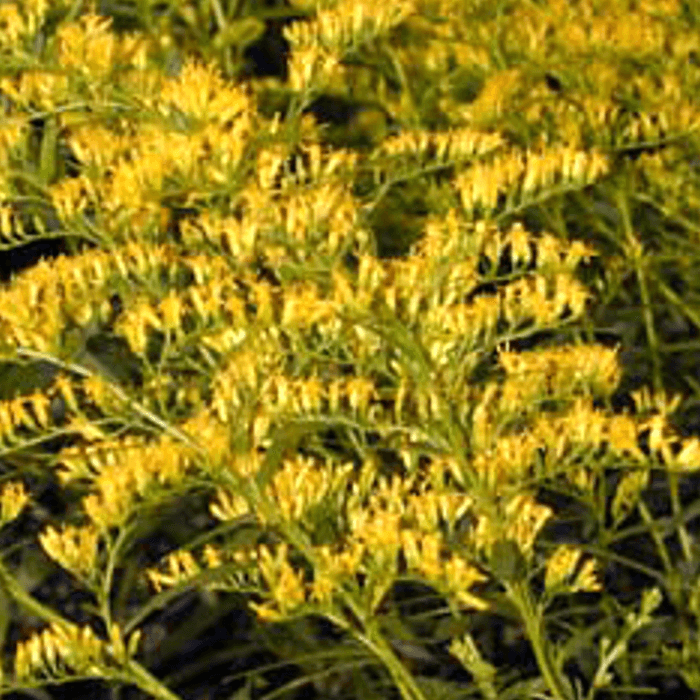
Photo courtesy of Van Berkum Nursery.
Solidago odora (Sweet Goldenrod or Anise-scented Goldenrod)
As its name implies, sweet goldenrod’s foliage emits a lovely anise-like scent when bruised. Its gracefully arching stems of yellow flowers bloom late summer into the fall, providing vital food to pollinators including specialist bees, and to butterflies preparing to migrate or overwinter. And, like other goldenrods, sweet goldenrod is host to over 100 moths and butterfly caterpillars.
Sweet goldenrod is native to dry, sandy, open woods, and can therefore tolerate poor, dry soils and light shade, but prefers full sun. This variety of goldenrod forms clumps, but does not spread as aggressively as some of the others.
Like other goldenrods, this plant has often been thought to cause hayfever or seasonal allergies, despite not being a wind pollinator. Blame for pollen-induced discomfort probably lies with ragweed, a wind pollinator that blooms at the same time.
Sun:
Sun to part shade
Height:
24-48”
Bloom time:
Aug - Sep
Pollinators: Bees, butterflies
Water:
dry to medium
Spread:
24-48”
Resistant:
Deer, rabbits
Host: 100+species of caterpillars
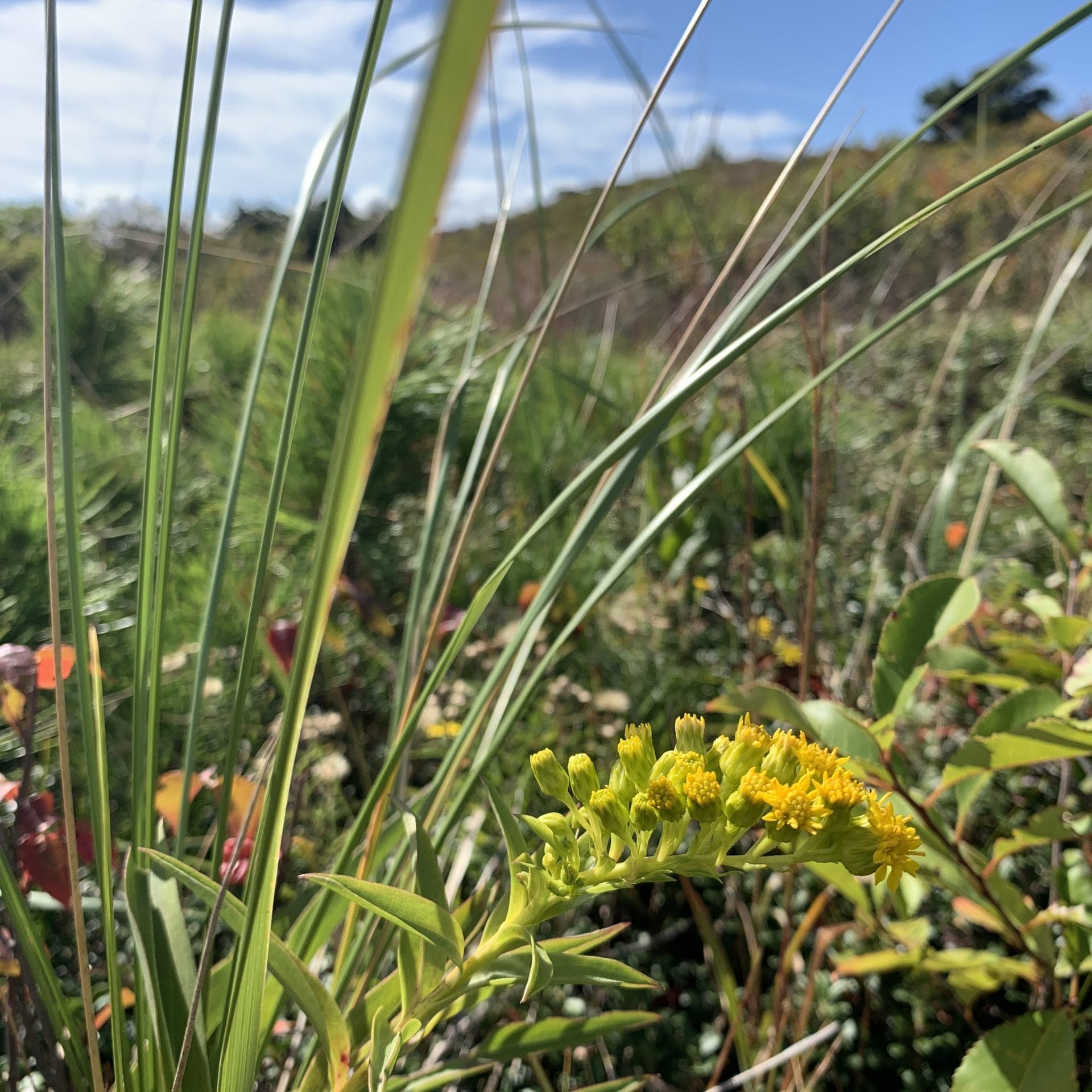
Photo by Crocker Nurseries
Solidago sempervirens (Seaside Goldenrod)
In the fall, seaside goldenrod is one of the primary food sources for migrating monarch butterflies, and its spikes of dense yellow flowers attract butterflies, bees, and other pollinators. During the winter, Seaside Goldenrod, like other goldenrods, provides overwintering habitat for gall-producing insects. These gall larvae, in turn, are an excellent source of nutrition in winter for birds, including woodpeckers and chickadees.
Seaside Goldenrod often occurs in dunes, grasslands, and transition areas. Its somewhat succulent, fleshy leaves are well adapted to tolerate salt spray and dry conditions, and this plant has been successfully used in dune rehabilitation. It blooms prolifically in full sun.
Seaside Goldenrod spreads through rhizomes and will form dense colonies over time.
Sun:
Sun to part shade
Height:
24-72”
Bloom time:
Aug - Oct
Pollinators: Bees, butterflies
Water:
dry to medium
Spread:
24-36”
Resistant:
Deer, rabbits
Host: 100+species of caterpillars
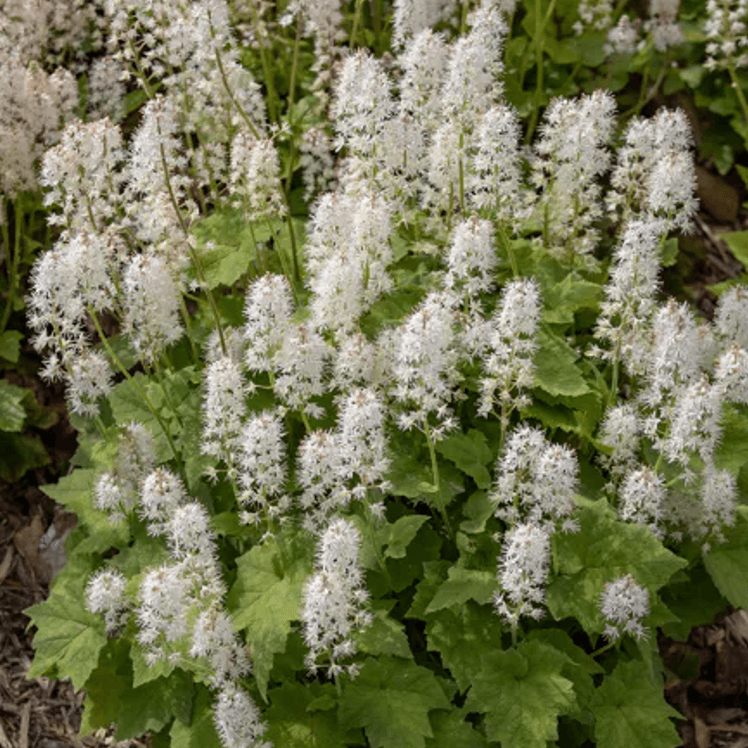
Photo courtesy of Centerton Nursery.
Tiarella cordifolia (Foamflower)
In spring, tiny pinkish-white flowers float above the mounded foliage on slender stems, attracting early bees and butterflies. The plant also hosts the larvae of a number of moths and butterflies, including eastern commas and mourning cloaks.
Foamflower is an excellent ground cover for shady areas with moist, well-draining soil, spreading through stolons (runners) to form dense clumps, one to two feet wide. This plant is grown easily in averagely moist, but not wet, soil in part to full shade.
Foliage turns an attractive reddish bronze in fall.
Sun:
Part to full shade
Height:
9-12”
Bloom time:
May - June
Pollinators: Bees, butterflies
Water:
medium
Spread:
12-24”
Resistant:
Deer, rabbits
Host: several varieties of caterpillars
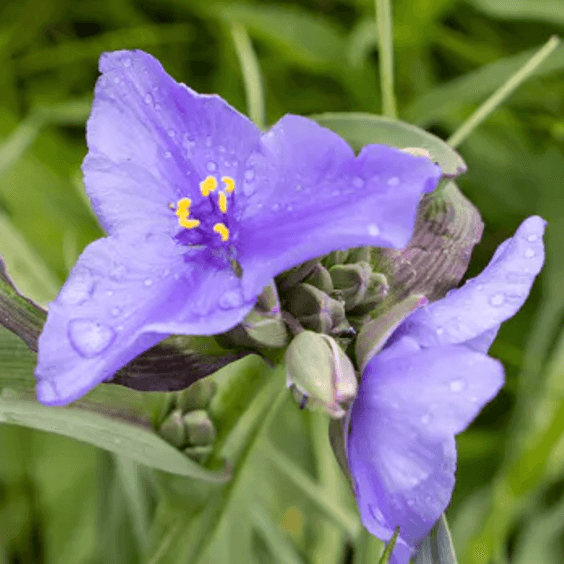
Photo courtesy of Centerton Nursery.
Tradescantia ohiensis (Spiderwort)
Spiderwort is one of the few pollinator-friendly plants that can grow in shade, though it does flower more profusely in sun or part sun. Its interestingly shaped three-petal purple flowers open during the morning, and close in the afternoon to conserve energy. Flowers provide nutrition for bees, butterflies, select beetles, and other pollinators.
Found in wood margins, meadows, and along roadsides, spiderwort can be easily grown in average, dry to medium soil. The plant can self-seed.
By mid-summer, foliage can start to flop over, and the plants benefit from being cut back by six to twelve inches. This will also encourage a fall bloom.
Sun:
Sun to part shade
Height:
24-36”
Bloom time:
Jun - Jul
Pollinators: Bees, butterflies, beetles
Water:
dry to medium
Spread:
18-30”
Resistant:
Deer, rabbits
Host: several varieties of caterpillars
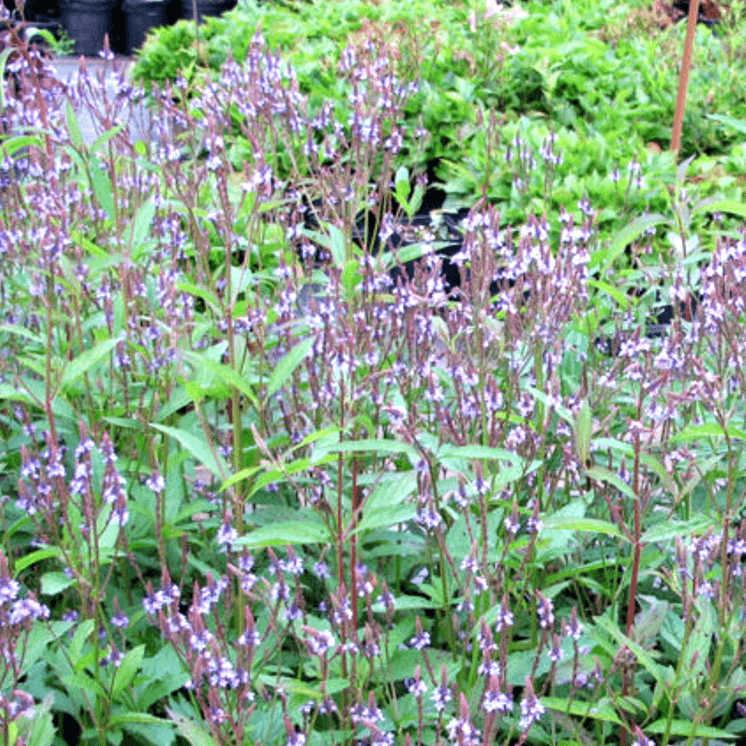
Photo courtesy of Van Berkum Nursery.
Verbena hastata (Blue Vervain)
Blue vervain’s candelabra-like spikes of densely-packed, tiny, tubular, purplish-blue flowers attract a range of pollinators, but are especially attractive to butterflies and hummingbirds. The plant also plays host to several butterfly and moth caterpillars, including that of the common buckeye butterfly and the verbena moth. Birds, including cardinals, sparrows, and juncos eat blue vervain seeds.
Blue vervain can be found in wet meadows, stream banks, and disturbed areas. It’s happiest in medium to wet soils and full sun, and could be used in moist sites around ponds or bogs. Blue vervain can be a relatively short-lived perennial, but also can self-seed.
Sun:
Full Sun
Height:
24 - 72”
Bloom time:
Jul - Sep
Pollinators: Bees, butterflies, hummingbirds
Water:
medium to wet
Spread:
12 - 30”
Resistant:
Deer, rabbits
Host: several varieties of caterpillars
Resources:
Missouri Botanical Garden Plant Finder
Association to Preserve Cape Cod’s Cape Cod Native Plant Finder
North Carolina Extension Gardener Plant Toolbox
Northern Gardener by the Minnesota State Horticultural Society
Virginia Native Plant Society, Conserving Wild Flowers and Wild Places
Xerces Society for Invertebrate Conservation, Pollinator-friendly Plant Lists